 |
 |
|
|
Stewards & Custodians is a newsletter for those investing in the preservation of Black history at a pivotal moment. As AI emerges as a dominant technology, we must contribute accurate information about our culture, even as nations begin returning what was taken. We track the urgency of this work and the financial opportunity as the global diaspora unites to reclaim and protect its own cultural legacy. |
|
 |
Our Next Generations Deserve All the Stories
This week, those of us who tell the stories focus on specific literature. Above are some of the books banned from many of America's Public Libraries.
Banned Books Week began in 1982, when librarians, booksellers and publishers responded to a sudden surge in challenges to books in schools, libraries and bookstores. The idea came from Judith Krug, a former director of the ALA's Office for Intellectual Freedom. This year Banned Book Week runs October 4 to 10, and the numbers show why it still matters: the American Library Association tracked 4,235 unique titles challenged in 2025, the second highest ever documented, and 92% of challenges were initiated by pressure groups, government officials and decision makers.
Black authors have long been among the targets. Toni Morrison's The Bluest Eye and Beloved, Maya Angelou's I Know Why the Caged Bird Sings, Alice Walker's The Color Purple and Angie Thomas's The Hate U Give have all faced repeated challenges.
As our stories come under aggressive pressure, preservation is an act of defense. The Obsidian Collection keeps the letters, photographs and books of Black history in trusted hands, documented and available to the people who need them, including the next generations who need them most. A story we hold can't be erased and holding it at this scale takes capital.
|
|
|
| Explore Our Investment Opportunity → |
|
|
 |
Still Missing From the Data
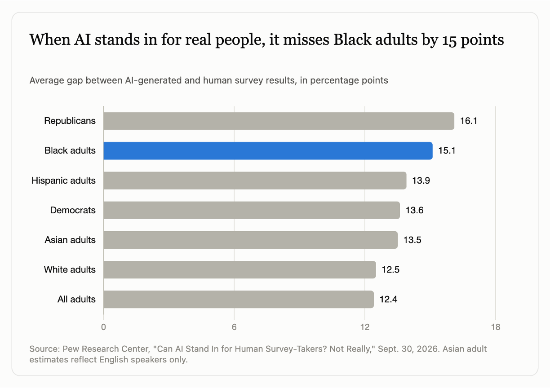
Pew Research Center just tested whether AI can stand in for real people in public opinion polls. Its conclusion: not really. Across nearly 300 questions, AI-generated respondents missed real human results by an average of 12 percentage points, and the gap was wider for Black adults, at 15 points. Pew didn't say why, but we have a theory. AI can only reflect the data it learns from, and Black history and culture remain underrepresented in that data. That is the purpose of The Obsidian Collection: a rights-cleared archive of authentic Black images, documents and voices, so that when technology tries to understand us, it learns from the real thing.
|
| Read the Pew Study →] |
|
|
|
|
|
|
The Case for Slowing Down
This past Monday, October 5, 2026, former employees of Anthropic, OpenAI and Google DeepMind told the New York City Council that the biggest AI companies are racing to build technology they don't know how to control. They described a reckless culture inside the firms and called for transparency and oversight, while executives from the companies were questioned about the risks. When the people closest to the technology are asking the world to slow down, the question for everyone else is what these systems are learning from.
We believe the answer should be documented, verified and given with permission. Every piece in The Obsidian Collection arrives with provenance, a donor and a story, and that is the careful alternative to a fast and opaque industry. It is the kind of foundation that holds up when scrutiny arrives, and investors in the future of AI should want it underneath
|
| Read the Full Story → |
|
|
Stories You Can Step Into |
|
|
Preservation is only half the work. The other half is letting people experience what we keep. On Google Arts & Culture, The Obsidian Collection Archives shares images from Black legacy newspapers and Black photographers through online exhibits open to anyone, from Harold Washington, The First Black Mayor of Chicago to Joe Louis, Outside the Ring and Hot Fun in the Summertime. It's one of the ways we keep Black history alive and in motion. |
|
| Explore Our Google Arts & Culture Page |
|
|
|
Together, we are not simply preserving media, we are protecting the cultural record of a people. Thank you for standing with The Obsidian Collection in this work. The archive speaks. We are listening. |
|
|
|
|
|
|
|
|


